30 Blogposts of Summer #23: Looking Beyond the Surface

First of all, sorry that I’ve been remiss in writing for the past few weeks. I’ve been doing a little traveling and the intentions to sit in my hotel room and write at the end of the day always sound better than they are. What follows are a few shorter posts to prime the engine again.

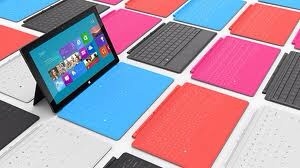
Last week Microsoft released Windows 8, the next major operating system for desktops, laptops, and tablets. As with any industry release there was celebration and analysis. My understanding is that the new OS is pretty good, and that the Surface Tablet has some real potential (based on the commercial, it certainly has a future as prop for dance numbers). I say “my understanding” because I haven’t really read anything about this product. I haven’t installed it on my desktop, and I don’t intend to.

This observation has (of course) led to self-analysis and questioning. How have I come from the time when I installed Windows 7 on the first day it was available for preview to this point of complete apathy? Thinking it through, I’ve come up with 3 theories, each of which says something about me and something about the industry.

  • When I do use a desktop at work or (very occasionally) at home, I’m completely happy with Windows 7. From the start I have liked almost everything about the OS. It kept the parts of earlier systems that worked and were comfortable, and cleaned up the mess that was Windows Vista. Among the features I’ve seen for Windows 8, there is nothing that I have ever felt I needed. Now I know in the nature of the business that at some point I’ll have to learn a new OS, but I’m seeing this now as a necessary evil, to be put off as long as possible.
  • Much of the effort in creating the new OS has gone into making a seamless experience from desktop to tablet to phone. Therefore the metaphors of the OS are much more closely related to the tablet than to previous desktop operating systems. This is a good point, but given my iPad/iPhone universe, I don’t want to run a desktop like a tablet to coordinate with a different set of devices.
  • I’m bored with the “me too-ism” of this move. Like the Zune was to the iPod, the surface product is just another tablet. I don’t know why I would move off the iPad for my principal mobile device unless a competitor was 100% better (and 50% cheaper).

Now this may just be me. There may be millions of excited consumers who want to stand in line for these products. I also may be making the same mistake I made when pooh-poohing the iPad in not seeing a major transformative development. Maybe in three months I’ll be singing another toon (“a foolish consistency is the hobgoblin of small minds” Emerson). But on the surface, I just can’t see it.

As always, I invite your comments.

Image Credit: Microsoft Surface publicity image. Used without permission (but I’m sure they won’t mind)

30 Blogposts of Summer #22: Flexibility, the Forgotten Skill

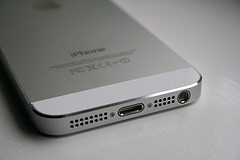
Among the less discussed features of the new iPhone 5 in the general press is an “upgrade” to the charging port. The new “Lightning” port requires a different charging cord from all earlier iPhones/iPods/iPads. While this charger boasts the advantage of faster transfer of data, the unintended (or actually very much intended) consequence is that no previous Apple docking device works with the new port. This includes radios, charging stands, CARS, and other devices. While an adapter is avialable (for $29), this does not have the full functionality of the new charging/data cord. Some call this “upgrade” a cynical cash grab, forcing consumers to purchase new cords, adapters, and devices, and others just aren't paying attention.

While I am very much in the Apple rage camp over this move, I can't help but think that it also illustrates something about educating students and teachers. Namely, that in our world of lightning fast changes, the best prepared students will have skills of flexibly, to adapt and learn new things quickly.

As a rule, educators are comfortable with permanence. The vast majority of our curriculum is built around things that don't change too much. 2+2 continues to equal 4; The Declaration of Independence was signed in 1776; sentences must contain a subject and a predicate; great literature was written by dead white males (just kidding). My experience as a teacher and with teachers is that many (including me) are not all that comfortable with change and flexibly. Changes to the schedule or the calendar are often met with skepticism (and occasionally anger). Calls to change methods of classroom instruction often meet with passive resistance. Suggest that perhaps the entire structure and purpose of school should be reexamined, and the gallows are out before your words stop echoing.

Of course techers are not monolithic in this, and this resistance to change is not limited to any profession. However, an educational system that emphasizes stability and permanance, as desirable as these may be, doesn't prepare students for a world that will value them not so much for what they know as for what they can become. Students do not need to know things as to know how to learn things.

I've been thinking a lot lately about teacher formation in the area of technology. In preparation for the 1x1x15 project, I know that we have a huge teacher training job in front of us. In my observation, most teacher training programs have been unsuccessful, particularly if success is to be measured in reach change of classroom practices. Teachers master a few “parlor tricks” to use during the next observation (and they still think that using PowerPoint is integrating technology!!!), but the overall orientation of classroom instruction stays the same.

As we take on this new task, I think we have to approach this in the same way we need to teach students. We need to stop emphasizing teaching teachers how to do things and start teaching them how to learn things. We need to stop giving them terminal skills which end with the next update or iteration. Move from “Here's how you use this machine/program/app,” to “Here's where you find videos that will show you how to do the next thing when it comes so you can teach yourself.”

With a hard wired set of facts and abilities, we become about as useful as an iPhone 4 dock in an iPhone 5 world.

Image Credit: Image: 'iPhone 5 – Lightning Connector, Speakers, and+Headphone+Jack' http://www.flickr.com/photos/83542829@N00/8009499527