 Today I attended a funeral of a truly wonderful person. Ruth Parsons was the administrative assistant (she would have preferred secretary) for the principal of Mater Dei High School for more than 40 years. She was there when I started as a teacher and still at the same desk when I became assistant principal. I can’t count the number of times that she saved my bacon in that first year when I came to her for help when I didn’t know how to do something, or when I messed up. She was always calm, reassuring, and never told anyone that she helped me.
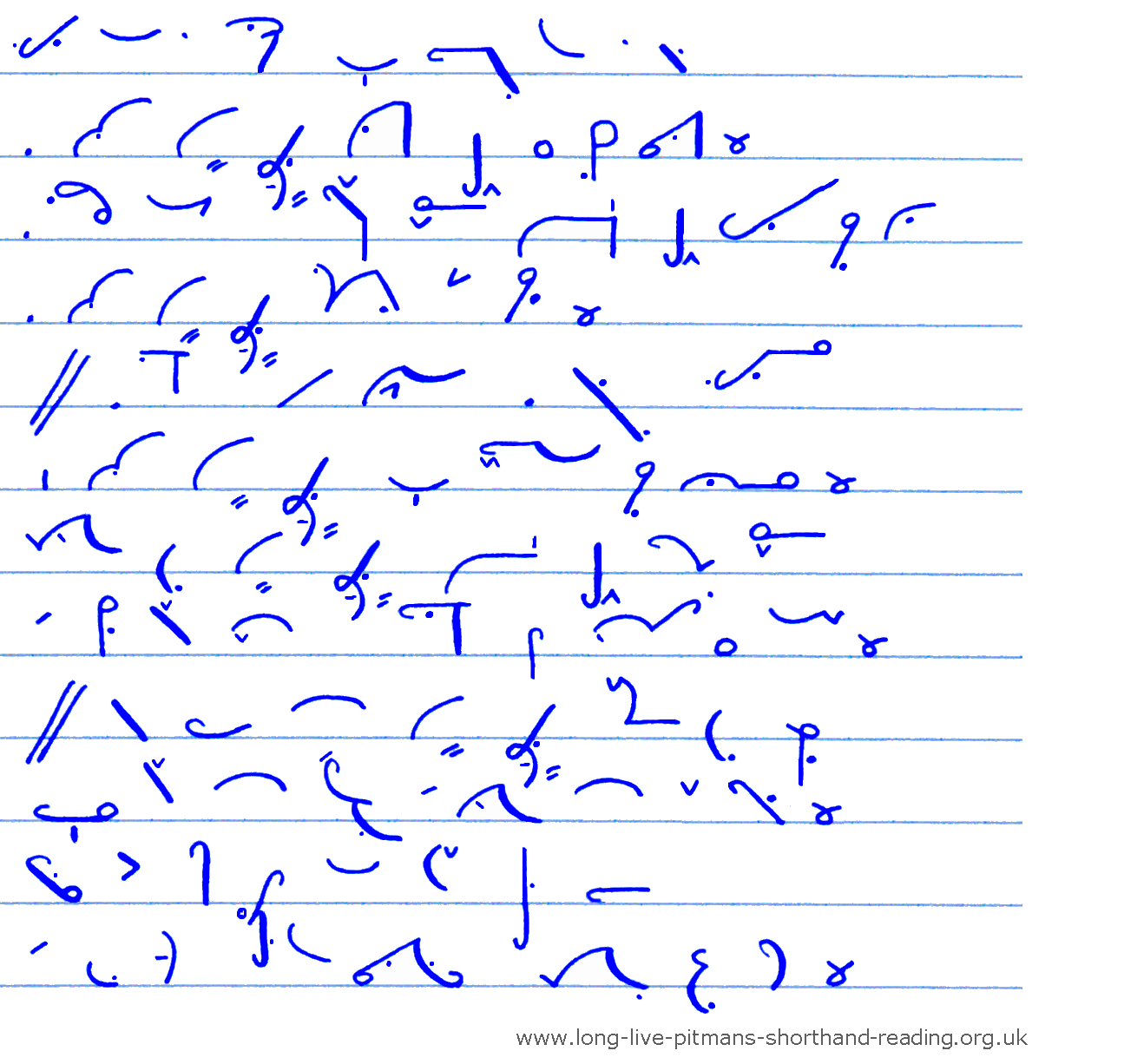
However, I’m not writing today primarily about how wonderful she was. Instead I wanted to talk about one of her talents, a talent that set her apart from any assistant that ever worked for me and virtually anyone working as an assistant today. Ruth was fluent in shorthand.
The administrative board of Mater Dei met every Tuesday morning to discuss all aspects of school operations. These meetings usually ran for 3-4 hours covering a wide range of topics and people. Through the entire meeting, Ruth sat in her usual place, taking notes in shorthand on a steno pad, a language that was completely incomprehensible to anyone else in the room. However, within a day or two, we received typed minutes capturing the facts and details of every conversation.
Shorthand used to be taught in every business college and every high school business course. At one time it was considered to be an essential skill of the secretary. From taking notes from meetings to taking dictation for letters, the steno pad and shorthand were the computer of their day. I remember my mom had a shorthand book on her bookshelf, and I was interested in it primarily because it was the Gregg Method of Shorthand.
It’s easy to attribute the decline of shorthand to the digital age, but it was going before the technology to replace it was invented. Other note taking methods were invented and taught and dictation was lost as an art both by dictator and recorder. I could no more dictate a coherent letter than, well take shorthand. Shorthand became a dying skill and a dying language. If one were to find Ruth’s pads from those meetings in the 90s, it is unlikely that anyone could be found to translate them (and if someone were found…please don’t translate them and show how stupid I was in those first years).
We lost Ruth a few weeks ago, but we lost shorthand well before that. The word still exists, often used in phrases like “BLANK is shorthand for…” but does anyone using this expression know that they are paying tribute to a dead language. It was an amazing skill, a skill that still can not be adequately replicated by technology.
God bless you Ruth, and God, if you need to dictate a letter….
As always I welcome your comments.
Image: “Away in a Manger” recorded in shorthand. https://www.long-live-pitmans-shorthand-reading.org.uk/gen-christmas-carols/160304-C02-AwayInAManger-long-live-pitmans-shorthand-reading.jpg
 One Christmas tradition that always makes me feel close to my mom is baking Christmas cookies. Mom loved Christmas, and there were things that always had to be done to do Christmas right. One of these was baking cookies. Early on we kids were invited into the process of decorating, mixing the dough, and eventually even making our own.
 During the past week, I remodeled the digital architecture of my apartment. These two additions, while not wildly ground breaking, represent changes to the ways I interact with technology and with media in general.
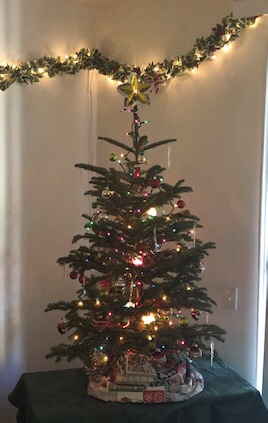 Today I want to examine another change to Christmas traditions that arrived this year. Amazon announced that customers could order live (well, technically dying, but whatever) Christmas trees delivered to their homes directly. Apparently Amazon contracts with local nurseries to arrange to have fresh cut trees delivered to your home…Amazon Prime members don’t have to pay for shipping.
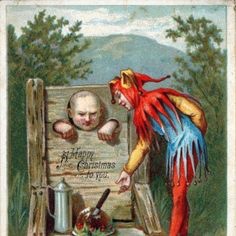 I’m planning on sending my Christmas cards this weekend. I haven’t bought them yet, but I’m certain they will be generally charming with a side of inspiration.
 Folks, we were lied to.
 I have traveled as part of my work for several years, but it wasn’t until 2018 that I travelled for a living. My work has taken me away from home for trips of varying length at an average of three times a month and about 70 nights of the year. As I waited for my flight today to bring me home for the rest of the calendar year, I jotted down some of the things I have learned from this nomadic lifestyle.